
Reliable communication becomes your lifeline in a world where cell connections disappear as soon as you step off the street. General Mobile Radio Service (GMRS) is the gold standard for short-distance, high-power two-way radio, whether you’re planning a multi-vehicle off-road convoy through difficult terrain, keeping a large family connected during a backcountry hike, or getting ready for emergencies when infrastructure fails.
It all sounds exciting, doesn’t it? To completely free yourself of the worry of mobiles, signals, and communication. However, to operate lawfully, you must have a current GMRS license from the FCC.
A GMRS license provides you access to 50 watts of power, repeater access for longer range, and the assurance of crystal-clear channels shared responsibly. The main question is, how do you get this license, and should you even get it, or are unlicensed radios fine? If you have also thought of these questions, then read on. This guide explains in full detail what GMRS is, why the license is more important than ever, who qualifies, the precise step-by-step procedure to obtain your GMRS radio license, and advice on how to get the most out of it. By the time you finish, you’ll have a clear roadmap that is more current and useful than anything else you’ll find.
Let’s get you broadcasting lawfully by cutting through the clutter.
General Mobile Radio Service, or GMRS, is a licensed UHF radio service that mostly uses the frequencies 462 MHz and 467 MHz. Consider it the larger sibling of the Family Radio Service (FRS), which operates without a license. Thanks to the 2017 FCC updates that modernized the service, GMRS delivers up to 50 watts on base stations, 5 watts on handhelds for repeater use, and even supports limited digital data like GPS pings or text messages, while FRS radios struggle beyond a mile or two in real-world conditions.
Voice communications, repeater operations that can extend your range to more than 25 miles depending on terrain and elevation, and shared but etiquette-driven access are all made possible by the 30 channels (15 main + 15 interstitial). During the busiest travel season, you can stop worrying about busy public channels like Channel 19 on CB radio. Families, outdoor enthusiasts, farmers, search-and-rescue workers, and preppers who like power and privacy without the exam-heavy commitment of amateur (ham) radio will find GMRS to be excellent.
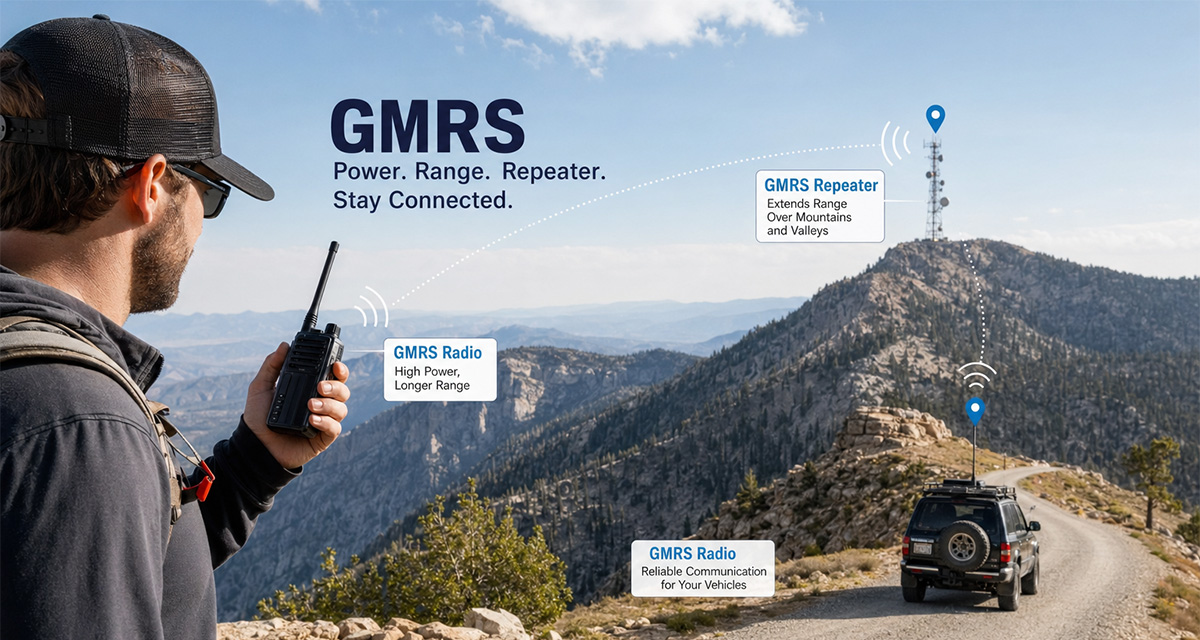
The need for GMRS has surged in 2026 due to an increase in extreme weather occurrences and the growing number of people who are off the grid due to remote work. One license covers not just you but your entire immediate family. No more paperwork, regardless of age. That’s coverage for the entire family at a single, reasonable cost. No business applications are permitted for new licenses (existing non-individual systems before 1987 can renew with restrictions), making it the epitome of personal-use radio.
Any transmission on the 462 MHz and 467 MHz bands (specifically the channels between 462.5500 MHz and 462.7250 MHz and 467.5500 MHz and 467.7250 MHz) requires a GMRS license, according to the FCC. Part 95, Subpart E of the FCC regulations prohibits operating without one. Fines can start in the hundreds of dollars and increase rapidly if you create interference or draw attention, even though the FCC rarely pursues casual personal use. More significantly, the shared spectrum that keeps GMRS dependable for all is harmed by unlicensed operation. While unlicensed users cause needless disruption and confusion, licensed users typically collaborate and abide by the regulations.
There is more to a GMRS license than just following the law. You get your own call sign (such as WR4ABC), legal access to repeaters for much longer range, higher permissible power (up to 50 watts on most channels), and the freedom to modify and improve your setup, all for a one-time $35 charge that is valid for ten years and covers your entire immediate family. Many articles on the internet downplay this, but there is a big difference: licensed radios go from being a limited toy to a dependable, professional-grade instrument. The system truly functions better for you and the whole GMRS community once you have a license.
Obtaining a GMRS license is surprisingly simple; there is no need for club sponsorship, a technical exam, or Morse code. The only thing you need to make sure that you are:
That’s pretty much it. Beyond the age and non-foreign-government regulations, there is no citizenship requirement. A parent or legal guardian may possess the license if you are under 18, and the entire family uses it. One of the broadest definitions of immediate family in radio services is provided by the FCC, which specifically includes the in-laws and extended relatives. Compared to ham radio’s per-person licensing, this makes GMRS particularly family-friendly.
Forget the out-of-date YouTube walkthroughs and confusing forum screenshots. Here we have the 2026 procedure, condensed from the official FCC Commission Registration System (CORES) and Universal Licensing System (ULS). Once you begin, it takes 15 to 30 minutes, and approval usually occurs in a matter of minutes to a few business days.
Go to apps.fcc.gov/cores, the FCC’s CORES portal. Click Register and provide your name, address, phone number, and email address on the one-page form. Your 10-digit FRN will be sent to you immediately and at no cost. For all FCC wireless filings, this is your master key.
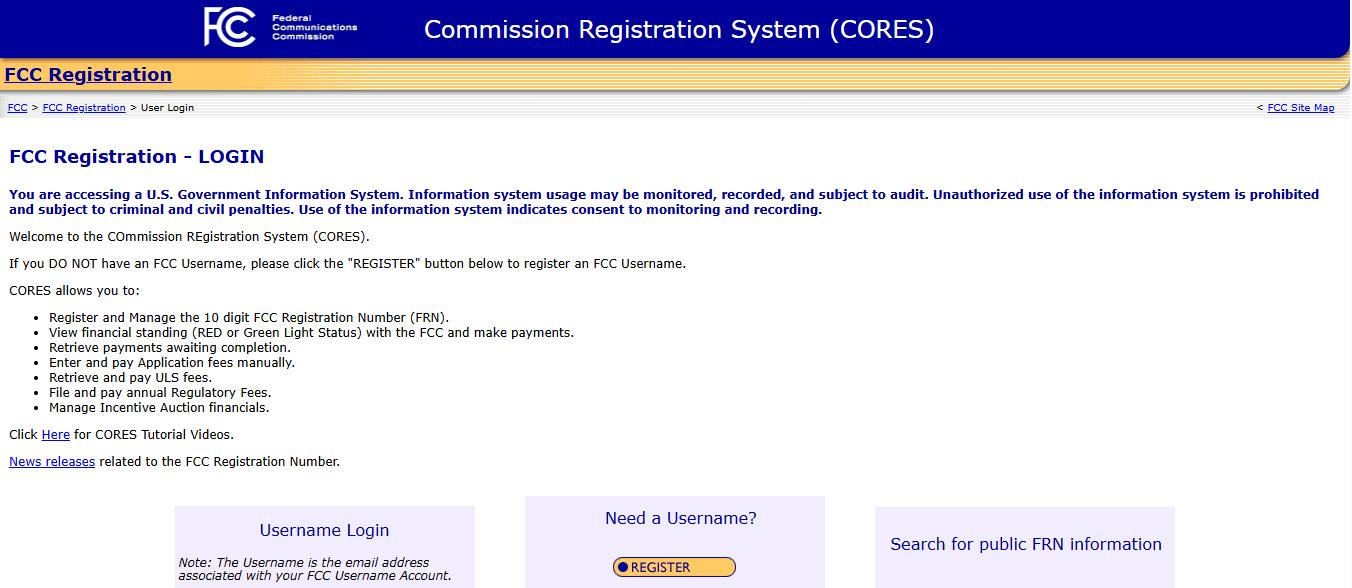
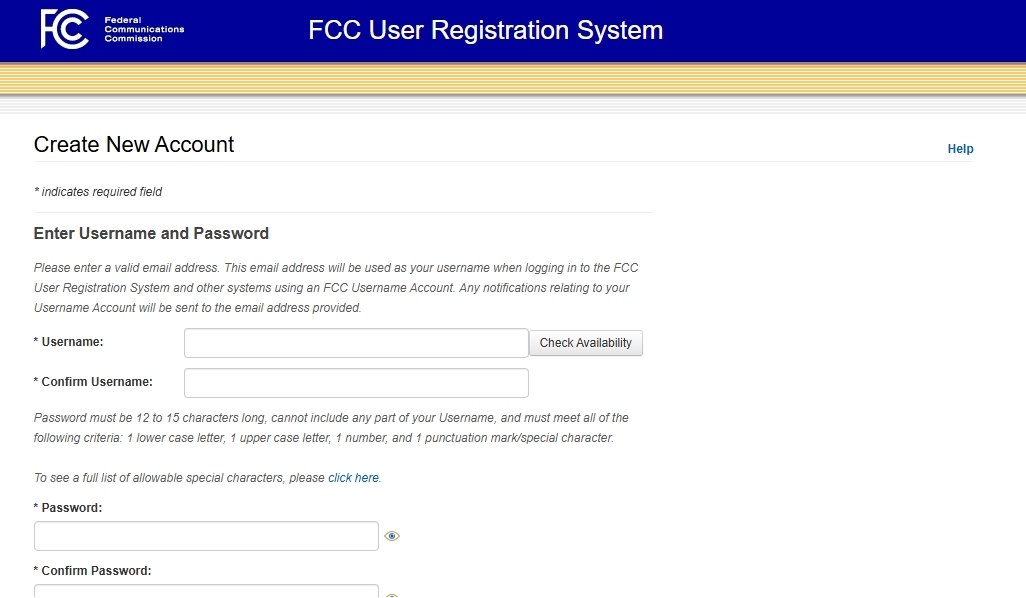
Go to https://wireless2.fcc.gov/UlsEntry/licManager/login.jsp, enter your FRN and password to log in, or create a username and password associated with your FRN (some users report a brief wait to associate). The system might ask you to link or verify accounts if this is your first time. Be patient; in certain situations, it may take up to an hour or even overnight.
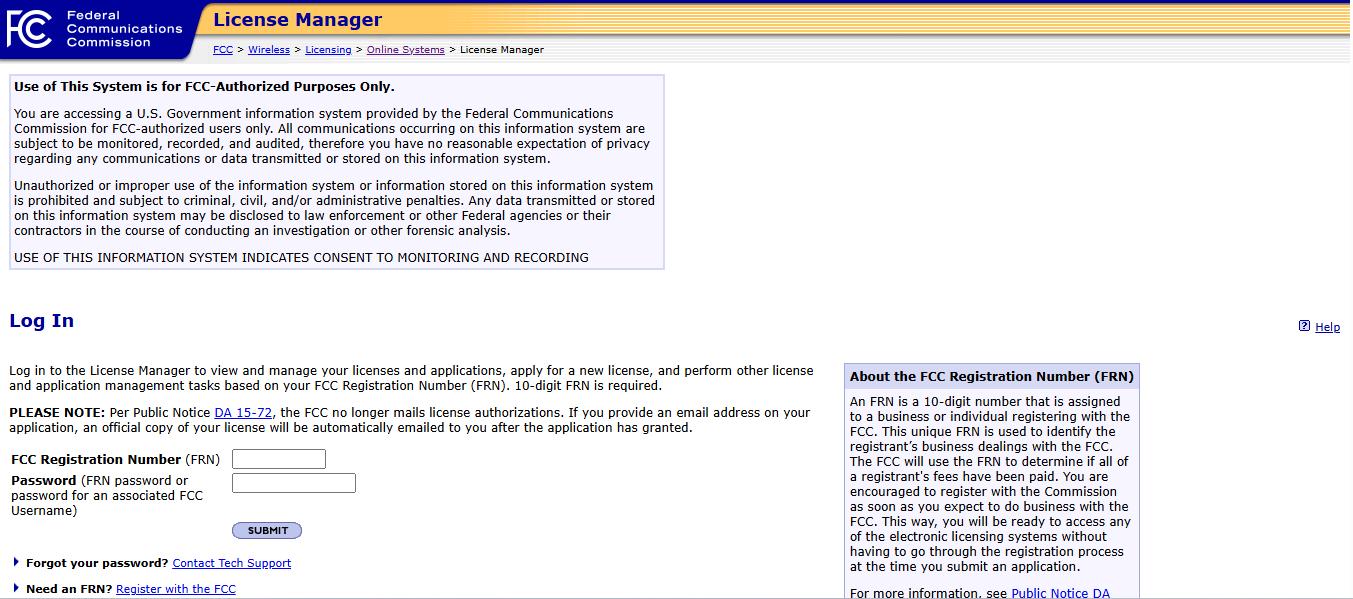
From the menu on the left, choose Apply for a New License. Click the Radio Service dropdown menu and select ZA – General Mobile Radio Service. Click Continue. For a simple new application, the form is just FCC Form 605 modified for GMRS; no schedules or attachments are required.
Enter your name, address, email address (which is essential for obtaining your authorization), and basic station information (you’ll choose Individual as the applicant category). On your first attempt, there is no need for comprehensive technical details. Review each screen thoroughly because typos can cause delays.
Fill in the signature areas with your complete first and last name. This electronically signs the application under penalty of perjury. Select Submit Application. The $35 fee will be flagged immediately by the system.
For payment, you’ll be taken to CORES. Use a credit card to pay $35 for the new GMRS license, which is valid for ten years. There are no applicable regulatory fees. Although it normally happens instantaneously, payment must clear within ten days. Your confirmation page and file number can be printed or taken as a screenshot.
Check your email (and spam folder). The majority of GMRS applications are approved in a matter of minutes to 48 hours. After approval, return to ULS, go to your licenses, and download the official authorization. Your call sign appears here. Use your call sign at the beginning and end of transmissions.
And, the total cost you pay is only $35. The renewal charge is the same and must be submitted 90 days before the expiration date or up to the expiration date. If it expires before renewal, then you’ll have to submit a new application; there is no grace period.
Now that your call sign is operational, you should select only GMRS equipment that has received FCC certification by checking the label. For privacy, set up your radios with repeater pairs, 30 channels, and CTCSS/DCS tones. Start small: a base/repeater for house or trail coverage, mobiles for cars, and handhelds for family outings.
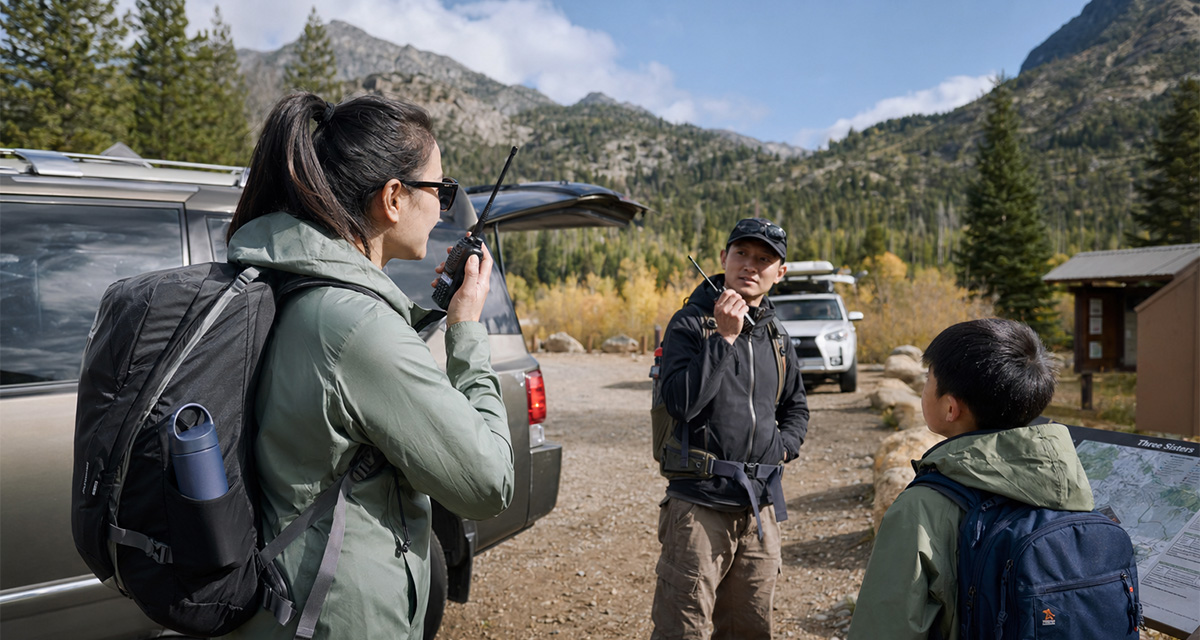
Once you have your GMRS license, pairing it with the right equipment makes all the difference. At Herda Radios, we’ve tested and selected models that deliver reliable performance on the full 30 GMRS channels, repeater access, and clear audio in real-world conditions.
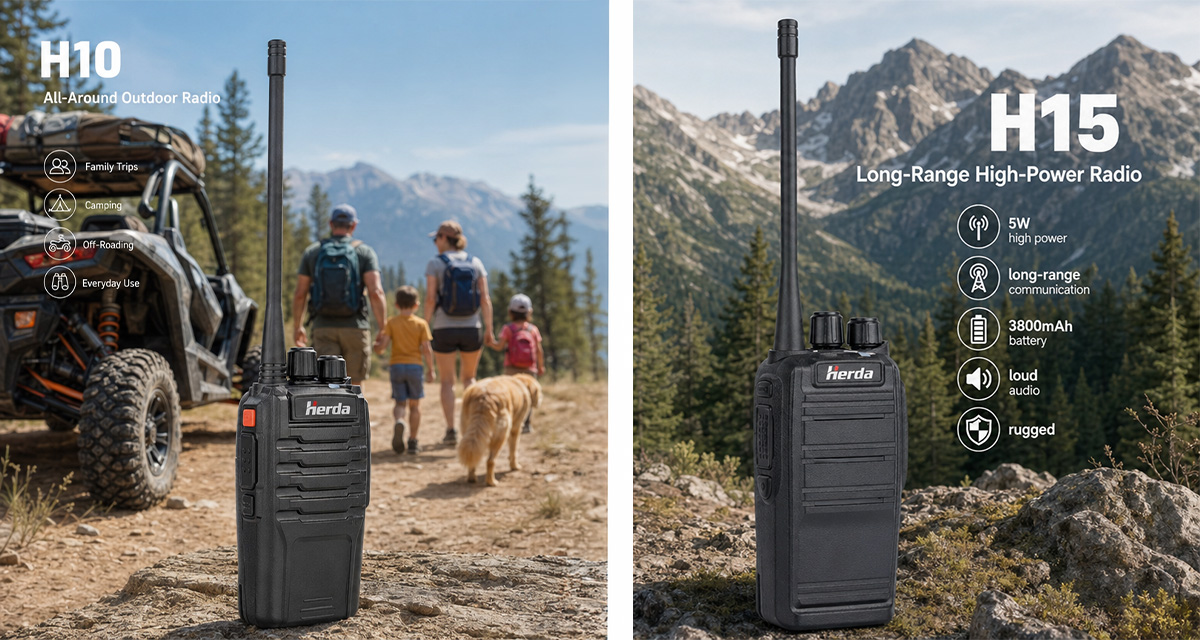
Here are our two best GMRS radios for 2026:
Perfect for: General GMRS communication, family hikes, and multi-vehicle vacations.
Perfect for: Large properties, search-and-rescue teams, backcountry excursions, or situations where you need the strongest signal in difficult conditions.
Two problems that new users commonly encounter are appropriate identification and repeater coordination. Join your local GMRS community via myGMRS.com to obtain the required tones and access codes for the majority of repeaters. Additionally, don’t forget to identify yourself with your call sign (such as WR4ABC) at the start and end of every broadcast, or at least once every fifteen minutes during longer conversations.
Purchasing cheap GMRS-ready radios that are not FCC type-accepted for GMRS use is another common error. To stay completely legal and steer clear of potential problems, stick with officially certified equipment from reliable companies.
GMRS stands out for most of the family, off-road, or group use cases requiring strong range and dependability. It combines increased power, repeater support, shared channels with FRS, reasonable licensing (one $35 price for ten years covering your entire immediate family), and no complicated regulations or examinations. However, it is good to know why it is better than other alternatives.
When it matters most, obtaining your GMRS license is an investment in unbreakable relationships rather than paperwork. This license future-proofs your travels, family activities, and emergency plans in 2026, when mobile networks are still unstable in the outdoors despite technological advancements. So, don’t wait. Visit the FCC website, obtain your FRN, and become a responsible GMRS operator. Your call sign is waiting for you. Enjoy the flexibility that only a licensed GMRS can provide, stay safe, and transmit intelligently.

To provide the best experiences, we and our partners use technologies like cookies to store and/or access device information. Consenting to these technologies will allow us and our partners to process personal data such as browsing behavior or unique IDs on this site and show (non-) personalized ads. Not consenting or withdrawing consent, may adversely affect certain features and functions.
Click below to consent to the above or make granular choices. Your choices will be applied to this site only. You can change your settings at any time, including withdrawing your consent, by using the toggles on the Cookie Policy, or by clicking on the manage consent button at the bottom of the screen.